15/07/2026
PM and Minister Charlton rule out copyright change (again)
 Prime Minister Anthony Albanese has given the clearest statement yet of the government’s position on copyright and AI, declaring that Australian creative work must not be used to train AI systems without the consent and control of creators. In a closely watched address at the University of Sydney, AI in Australia’s Interests, the Prime Minister said:
“Australian writers, musicians, artists and journalists must retain ownership and control of their work.
“No company should use Australian books, art or news to build or train AI without the artist’s control – and that includes the artist’s control of the price and value of their work.
“Anything less is theft.”
In a direct reference to copyright policy, the Prime Minister also noted that the Attorney-General is “facilitating consultation on copyright and artist protections where AI training is involved”.
The APA welcomes these strong statements. They were reinforced earlier in the day by Assistant Minister for the Digital Economy Andrew Charlton, who ruled out changes that would weaken copyright protections during an ABC interview ahead of the Prime Minister’s speech.
Asked about copyright and AI, Charlton said:
"The government’s position on this has not changed. We support the Australian creative sector. We have ruled out a text and data mining exemption. We have said where Australian copyright material is used it must be used with the consent and with compensation for the creators and copyright holders who made it. That has been our approach; it continues to be our approach. And the Attorney-General is leading a methodical workstream considering how that approach is implemented in the world of AI."
Recent reporting in relation to AI has pointed to risks to copyright. Anthropic reportedly advised the government that a proposed $21.6 billion investment in Australian AI model development and infrastructure was contingent on ‘greater certainty’ about copyright and its liability to rights holders. Treasury briefing material indicates that Anthropic raised difficulties licensing the “long tail” of smaller rights holders, although it stopped short of seeking an outright copyright exemption. This framing around a supposed uncertainty is a position the APA and rights holders firmly reject.
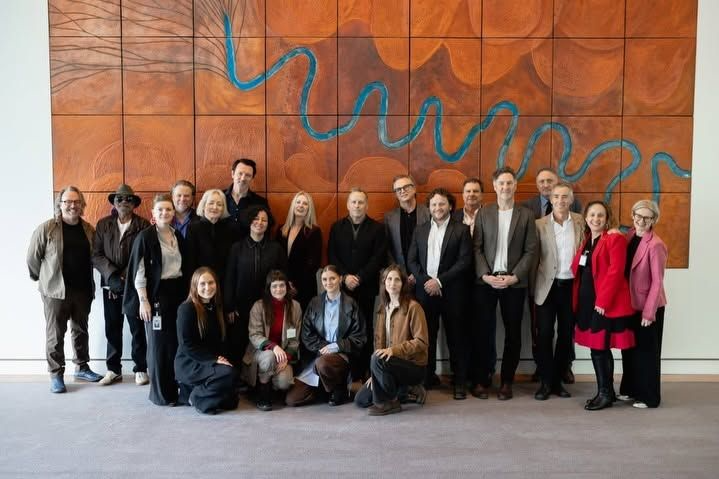
In late June the APA worked with the ASA and Copyright Agency on a coordinated campaign involving a Canberra delegation and press conference featuring Anna Funder and Andy Griffiths, extensive media coverage, and dozens of meetings with ministers, parliamentarians and officials. The APA thanks all publishers who have supported the open letter campaign and encouraged their authors to participate. This support has reinforced a clear message across the book sector and wider creative industries: copyright must remain based on permission, licensing and fair payment.
International rights holder organisations—including the International Publishers Association and STM—also sent a joint letter to the Australian Government yesterday, Tuesday 14 July, reinforcing the importance of copyright, licensing and fair payment.
Despite the statements from the PM and Minister Charlton, the APA and the wider creative industries remain vigilant to ensure negotiations over AI investment do not weaken the rights of Australian creators and publishers. Ongoing work will be needed to defend market-based licensing, and secure fair remuneration, transparency about the use of copyrighted material, and effective AI regulation and enforcement.
Meanwhile in the US, AI piracy lawsuits proliferate: Hachette, Cengage, Elsevier and author Scott Turow have launched a class action against Google, alleging it unlawfully copied books and journal articles to train Gemini. In the wake of the Anthropic piracy settlement, the case seeks damages and an injunction against further unauthorised use.
New Advocacy Briefings
Our first round of advocacy meetings was a big success, with lots of engagement and many of you in attendance. Below you'll find the details of the next advocacy briefings:
Trade Publishing Advocacy Briefing – Tuesday 10 November, 12-1pm AEST
Hear from the APA's Head of Policy Dr Stuart Glover on the key issues affecting the trade publishing sector, including developments in AI and copyright, and the Australian National Cultural Policy. These meetings are held bi-yearly and are open to all APA Full Members.
Register here
Educational Publishing Advocacy Briefing – Thursday 12 November, 12-1pm AEST
Hear from the APA's Head of Policy Dr Stuart Glover on the key issues affecting the educational publishing sector, including AI and copyright developments, and the policy settings for schools, tertiary, and scholarly and journal publishers.
These meetings are held bi-yearly and are open to all APA Full Members.
Register here
Members can access all resources related to our Advocacy work via our Resource Library.