10/02/2026
New TitlePage data quality measures were introduced by the Australian Publishers Association in 2025, and one year on the reports show that the health of Australian metadata is trending in the right direction.
Headline figures show improvements
Improvements have been seen in both overall Data Quality and Supply Chain Health scores, two measures shaped by booksellers through identifying their most valued publisher data. These measures have allowed publishers, and the Australian Publishers Association, to quickly assess data quality and identify areas for improvement.
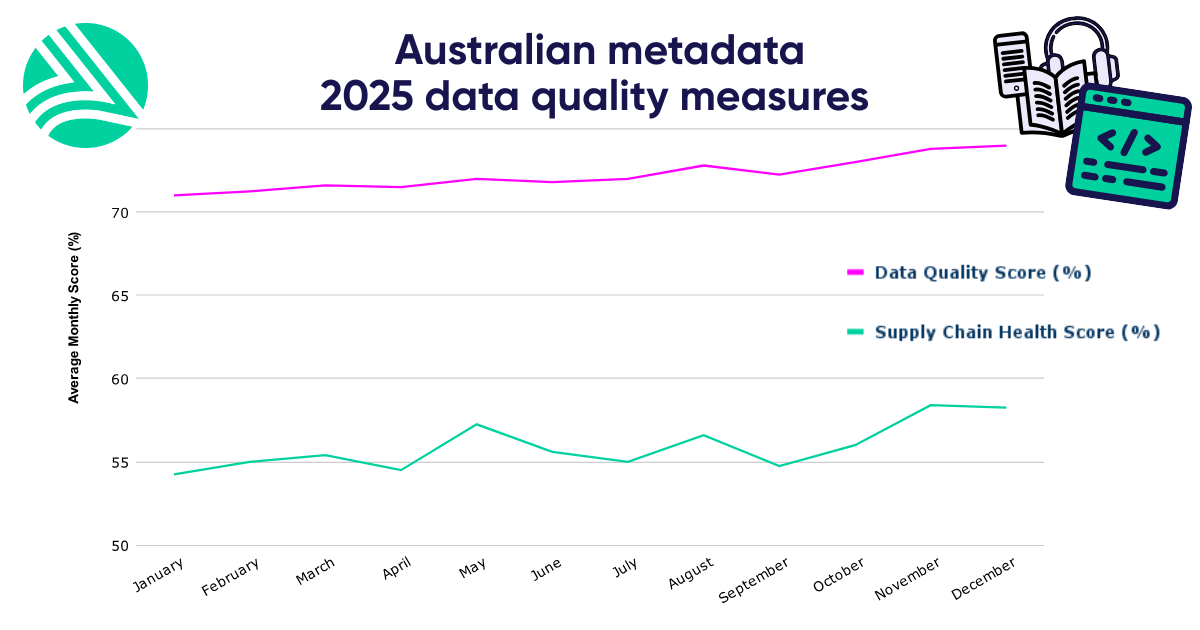
Across 2025 the Data Quality score increased by 3% to 74%, indicating an improvement on metadata completeness across the fields and data most valued by booksellers.
The Supply Chain Health Score increased by 4% to 58%. This score is driven by the title availability and the provision of estimated arrival dates (ETAs) – crucial information for booksellers – as well as how frequently active product records are updated.
Cat Colwell, head of product and supply chain at the Australian Publishers Association, welcomed the upward trend in both these figures and the improvements to the underlying data, saying:
“Since we started this reporting project it’s been really positive to see an overall improvement of Australian metadata quality. Beyond the headline figures, many publishers have made the reporting part of their workflows to ensure high quality metadata meet the needs of booksellers and others across the supply chain.”
Publishers increasingly providing Thema and age ranges
Publishers have been embracing Thema in recent years, and this was captured in last year’s data. In 2025 there was a 7.3% increase in titles including Thema, with publishers ensuring that 64% of titles on TitlePage have native Thema. The remaining 36% have Thema created by TitlePage based on BIC codes, which may not be as optimised as Thema curated by publishers.
Another area of improvement has been in the provision of age range information for children’s books, increasing by over 15% across 2025 while the provision of this information across all titles increased by 23%.
With the upgrade to TitlePage in mid-2026, metadata like keywords, age ranges and Thema will play a central role in title discoverability and how users can make more exploratory searches. Descriptions and biographical text will also be surfaced through the new search, along with details like awards, curriculum alignment, and contributor information. These will offer users a wealth of new options to explore and discover titles – but only if publishers provide the underlying metadata.
On this, Cat Colwell highlighted that the APA and the TitlePage team is available to support publishers with their metadata, saying:
“We’re here to help guide publishers on the journey to enhance their metadata. It’s essential for the supply chain, and plays a crucial role in discoverability – both with the upgrades to TitlePage, and through the major online retailers. The TitlePage team can help members review and prioritise their metadata improvements, so please get in touch if you need any support.”
Benefits of the data quality reporting
Weekly reporting emails alongside on-demand dashboards were introduced by the APA to support publishers with their supply chain efficiency and help them enhance title discoverability. These insights allow publishers to quickly check that their data is accurate and up to date, which supports better visibility and smoother operations across the book market. The reports and dashboards focus on a selection of key metadata fields, and allow publishers to track their own progress over time and compare to industry benchmarks such as those above.
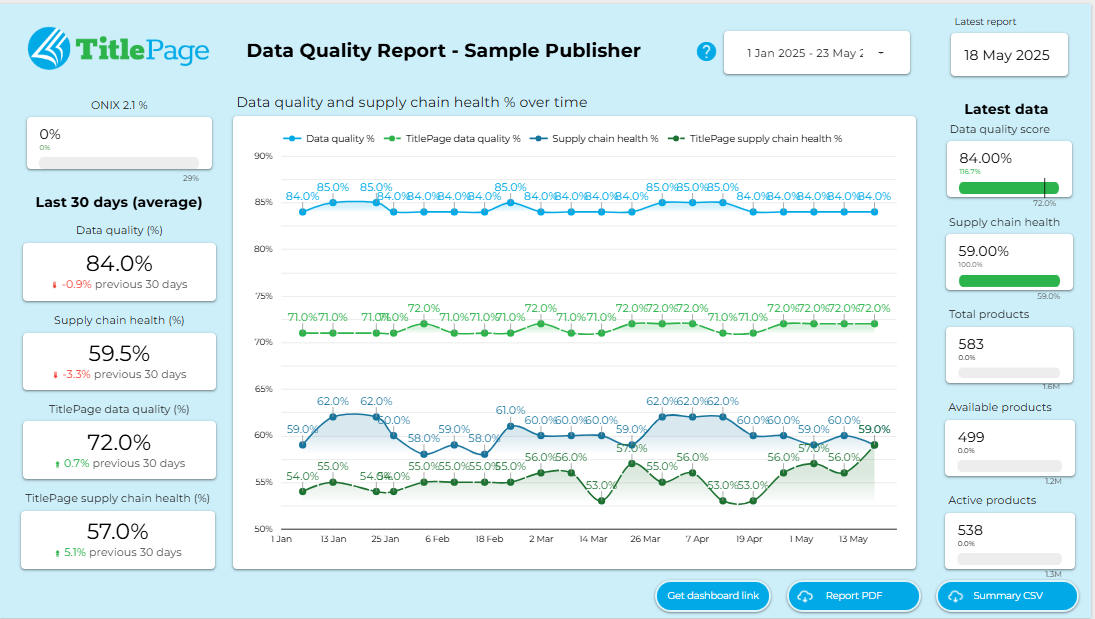
For each of the tracked data quality measures, publishers can download a list of titles where action is needed, making it quick and easy to find and solve metadata issues. Feedback from publishers on the reporting has been positive, with Penguin Random House product director Kate Hoy saying:
“The new TitlePage data quality reports offer a practical way to quickly spot and resolve metadata issues more efficiently, enhancing the quality of our data and supporting the success of our titles.
Streamlining our metadata management not only benefits our publishing process, but also supports booksellers in delivering our titles to a wider audience. It's a win-win for both publishers and booksellers alike.”
How to improve your metadata
To make the most of this reporting, here’s a brief overview of what publishers in the reporting program should do to improve their metadata:
-
Review your dashboards and reports: take time to evaluate the insights and make necessary updates to ensure your titles are easily discoverable. Ensure you refine your metadata and supply chain processes to stay ahead against industry benchmarks.
-
Act on recommendations: fix any flagged issues to enhance metadata quality and ensure accurate availability.
-
Provide feedback to the APA: your continued input will help us fine-tune the dashboards and reporting to best help your organisation.
-
Reach out for support: the TitlePage team is always on hand to help members with their metadata, so please get in touch if you need any support here or have any questions.
You’ll also find best practice guides for ONIX and Thema in the member resources section of our website, and we aim to regularly provide metadata training so let us know if your team could benefit from an ONIX or Thema workshop.
If your organisation doesn’t have a dashboard yet please get in touch – these are available as a benefit to Full Publisher members with a TitlePage subscription.